

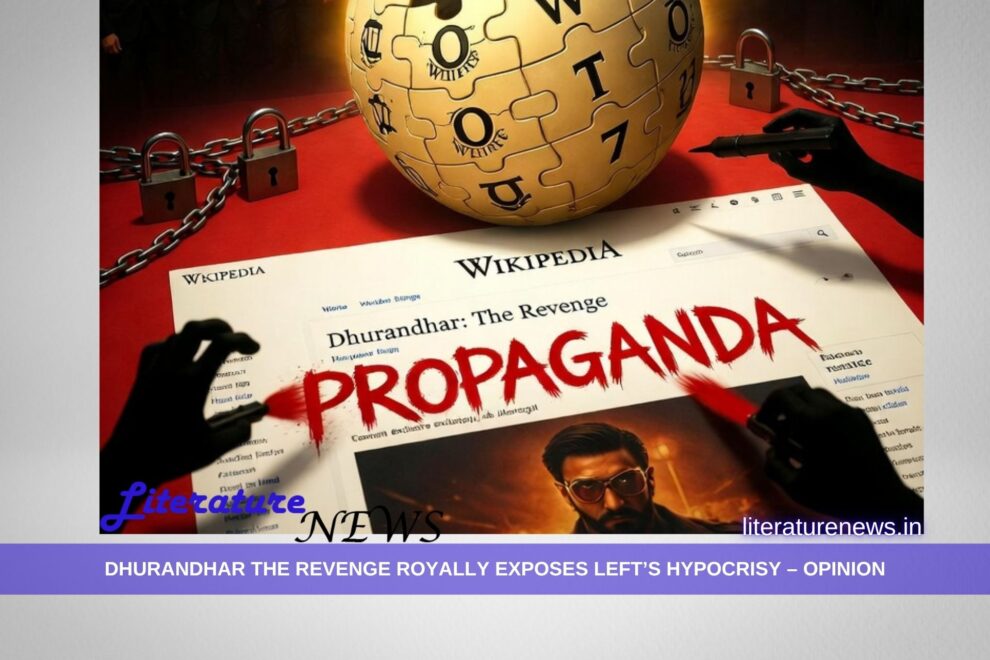
The phenomenal commercial triumph of Dhurandhar: The Revenge, which has shattered multiple box-office records by grossing over 761 crore rupees worldwide in its opening weekend alone and racing past the 500-crore mark in just five days, has clearly unsettled a familiar section of India’s cultural and media establishment. Directed by Aditya Dhar and starring Ranveer Singh as the undercover operative Hamza Ali Mazari navigating the Karachi underworld in a high-stakes spy thriller that builds directly on the first film’s narrative of Indian intelligence operations rooted in the 1999 IC-814 hijacking episode, the sequel celebrates raw patriotism, strategic resolve, and the quiet victories of covert action against cross-border threats. Audience turnout has been unprecedented, with advance bookings exceeding 1.5 million tickets and paid previews alone contributing tens of crores, reflecting a genuine mass embrace of its unapologetic nationalist tone rather than any orchestrated campaign. Yet this very success has prompted the usual chorus from left-liberal critics, intellectuals, and influencers to label the film as crude propaganda. This charge rings hollow when measured against their own track record of championing ideologically aligned cinema under the banner of artistic freedom.
The core objection appears to stem from the film’s refusal to soften its portrayal of Pakistani terror networks, underworld figures, and the human cost of past policy missteps such as the negotiated release of militants during the Kandahar episode, elements that frame Indian espionage not as rogue adventurism but as a necessary response to existential threats. Critics in outlets like The Hindu have decried it as promoting a violent nationalism that reduces citizenship to performative aggression against enemies, while figures such as Dhruv Rathee have publicly dismissed it as dangerous misinformation that blends fact with fiction to mislead viewers on intelligence operations. These voices argue that the movie’s success signals a troubling majoritarian shift in popular culture, one that supposedly homogenises Muslims and demonises Pakistan without nuance. Such claims, however, conveniently ignore the film’s basis in documented events like the IC-814 crisis and real-world precedents of Indian agents operating deep in hostile territory, choosing instead to frame any positive depiction of national security as inherently suspect. What truly irks this cabal is not the film’s fictional embellishments, which are standard in the spy genre globally, but its decisive break from the decades-long Bollywood template of “Aman ki Asha” brotherhood narratives that often glossed over Pakistan’s role in fostering terrorism while painting Indian institutions as the primary aggressors.
This selective outrage lays bare a profound hypocrisy on the question of freedom of art and expression, a principle the left-liberal establishment invokes religiously when the ideological shoe fits its own foot but discards the moment cinema dares to reflect a counter-narrative. Consider Vishal Bhardwaj’s Haider, a 2014 adaptation of Hamlet that openly sympathised with Kashmiri separatist grievances, depicted Indian security forces through scenes of graphic torture and arbitrary detentions, and largely sidelined the exodus and suffering of Kashmiri Pandits in favour of a one-sided exploration of “azadi.” Far from being branded propaganda, the film was widely celebrated by the same liberal critics as a bold artistic statement and a fearless commentary on human rights abuses, earning National Film Awards and international acclaim without any sustained outcry over its selective historical lens or its subtle advocacy for a narrative that questioned India’s sovereignty in the Valley. Bhardwaj himself faced no career-ending accusations of ideological capture; instead, his work was defended as essential cinema that challenged power structures. Similarly, when Prithviraj Sukumaran’s L2: Empuraan stirred controversy earlier with its depiction of the 2002 Gujarat riots as a politically engineered conspiracy complete with factual inaccuracies later contested by court records and investigations, liberal voices rallied around it as a victim of right-wing censorship, framing any demand for cuts or accountability as an assault on creative liberty and decrying online backlash as evidence of majoritarian intolerance. The CBFC cleared the film with minor edits, yet the defence remained absolute: art must be allowed to provoke, even if it distorts verifiable events to advance a particular political reading of communal violence.
Contrast this with the treatment meted out to films that align with a nationalist worldview. The Kashmir Files, which documented the targeted killings and forced migration of Kashmiri Hindus in the 1990s through survivor testimonies, was immediately dismissed by the same ecosystem as saffron propaganda peddling division, despite its grounding in documented history and official records of the exodus. No such scrutiny was applied to earlier works like Rang De Basanti, which romanticised anti-establishment vigilantism and critiqued government corruption in ways that resonated with left-leaning audiences, or Article 15, lauded for its unflinching caste critique that implicitly targeted perceived upper-caste and majoritarian complacency. These films, often praised for their social relevance, were never subjected to the “propaganda” label with the same venom; instead, they were hailed as conscience-stirring cinema that advanced progressive values such as secularism and justice. Even mainstream entertainers like Pathaan, featuring cross-border dance sequences involving RAW and ISI operatives in a pool-party camaraderie that blurred lines between adversary and ally, escaped any meaningful rebuke for potentially softening public vigilance on security matters. The pattern is unmistakable: ideological alignment determines the verdict. When cinema reinforces narratives of perpetual forgiveness toward Pakistan, systemic majoritarian guilt, or critiques of Indian state institutions, it is elevated as a courageous expression protected by constitutional guarantees. When it dares to depict the Indian state’s intelligence apparatus as competent and patriotic, or highlights the costs of past governmental weakness in handling terrorism, it is reduced to state-sponsored messaging unworthy of artistic merit.
This double standard not only undermines the very principle of free expression that the left claims to defend but also reveals a deeper discomfort with the erosion of their long-held monopoly over Bollywood’s storytelling. For years, the industry functioned as an echo chamber where scripts routinely prioritised themes of internal societal guilt over external threats, often under the guise of nuance, while any deviation invited accusations of jingoism. Dhurandhar: The Revenge and its predecessor have upended that dynamic by achieving both critical technical excellence, through Aditya Dhar’s assured direction and Ranveer Singh’s committed performance, and overwhelming popular validation at the ticket counter. The audience’s verdict, expressed in record collections that have outpaced previous blockbusters, demonstrates that viewers are no longer content with narratives that prioritise ideological comfort over unvarnished national self-assertion. By succeeding on merit rather than institutional backing, the film forces a reckoning: if art truly thrives on pluralism, then the freedom-of-expression charade must apply equally, not as a selective shield for one ideological camp. The left-liberal cabal’s frantic labelling of Dhurandhar: The Revenge as propaganda does not diminish the movie; it merely exposes the hollowness of their own stance, proving that their commitment to artistic liberty has always been conditional on narrative control. In the end, the box-office numbers and the public’s sustained engagement tell a story far more compelling than any editorial meltdown: Indian cinema is finally reflecting a broader, more assertive national consciousness, and no amount of selective indignation can rewind that cultural shift.
Opinion by Amit for Literature News


Add Comment